

EWA Welfare Corner: The 5 Domains of Animal Welfare - Mental State
Maximising the Positive, Minimising the Negative: Supporting Your Horse’s Well-being
At the core of every great partnership is a horse that feels safe, comfortable, and understood. As Equestrian WA members, we all share a responsibility to support not just our horse’s physical health, but their mental well-being too.
Horses experience a range of emotions, both positive and negative, just like we do. Their overall welfare, and quality of life, depends on the balance of these experiences over time. While we can’t completely avoid stress or discomfort, what truly matters is how quickly and effectively those experiences are resolved.
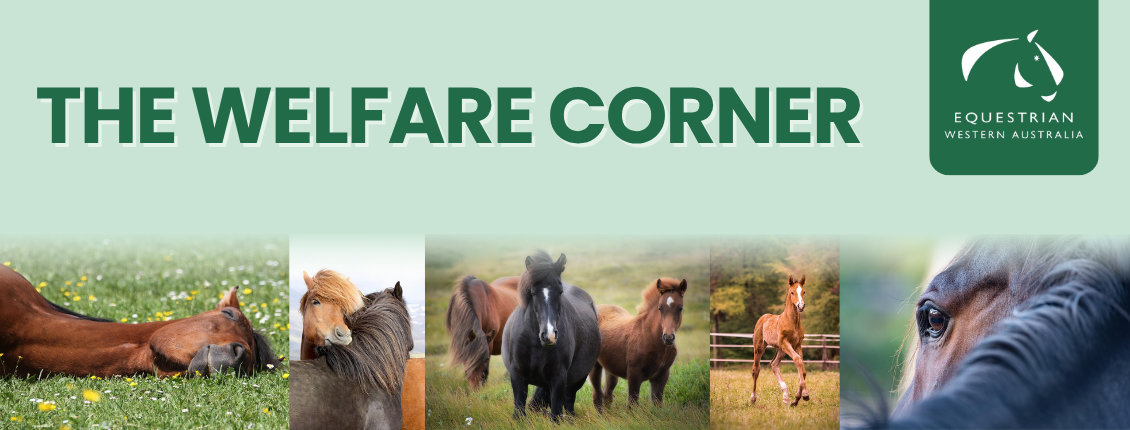
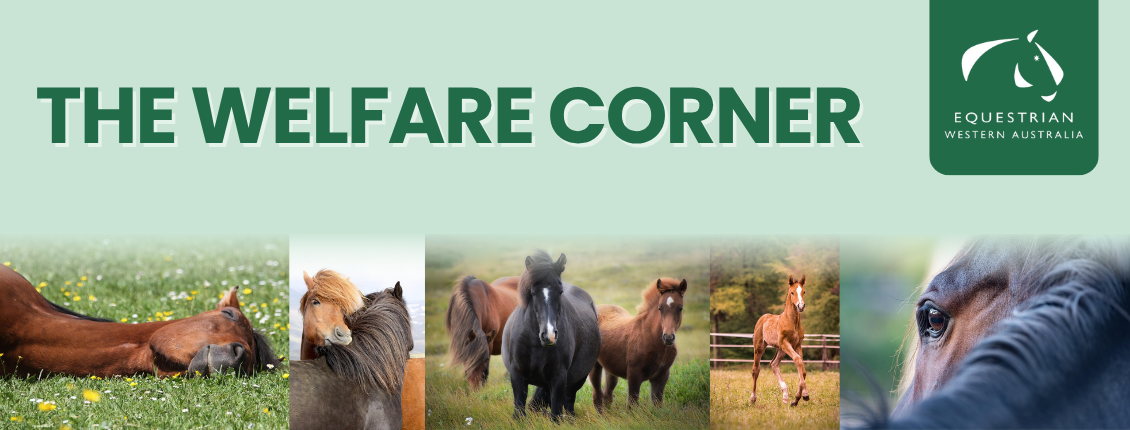
In everyday life, this comes down to meeting some simple but essential needs. Horses should be able to drink when they’re thirsty, eat when they’re hungry, move freely, find shelter from the elements, and connect with other horses. When these needs are met, horses are far more likely to feel relaxed, confident, and secure.
When negative experiences, such as pain, stress, or isolation, are not addressed, they can become more intense or long-lasting. Over time, this can affect behaviour, performance, and overall well-being, making it harder for horses to enjoy positive experiences.
Creating a positive environment doesn’t have to be complicated. Small, thoughtful choices in daily management can make a significant difference. Providing opportunities for movement, encouraging natural behaviours like foraging, and allowing for social interaction all contribute to a horse’s mental well-being.
Healthy horses who feel safe in their environment are better able to cope with challenges, adapt to new situations, and perform at their best, whether at home or in competition.
As riders and horse owners, it’s worth taking a moment to reflect:
- Are we maximising opportunities for positive experiences?
- Are we minimising unnecessary stress?
- Are we responding quickly when our horse is uncomfortable or distressed?
By keeping these questions in mind, we can continue to build stronger partnerships with our horses—ones based on trust, understanding, and good welfare.
Because a horse that feels good, performs better and enjoys the journey along the way






 Newsletter